Valorant lowest to highest rank challenge shows how fast a Radiant smurf climbs from Iron
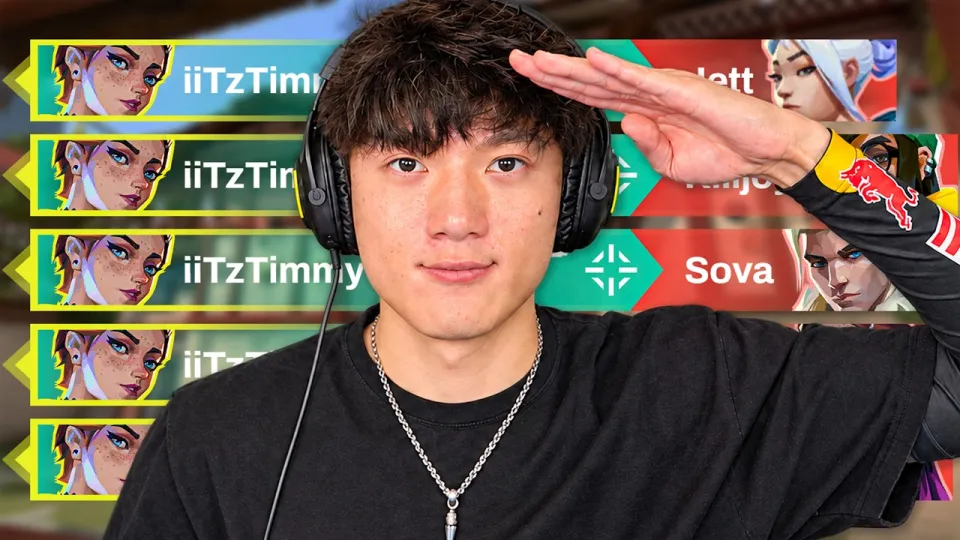
Video: I Might Be Getting TOO Good at Valorant… (Lowest To Highest Rank Challenge)
Need articles like this for your video? They help promote it on YouTube and Google — order them in the Telegram bot @sat_sit_bot. Articles with your video embedded are written and posted by the bot itself — on popular topical sites (no ads). Free trial — 50 articles.
· based on the channel iiTzTimmy Two
Key takeaways
- iiTzTimmy runs a Valorant lowest-to-highest rank challenge, starting from the bottom of the ladder and climbing toward Radiant.
- The first games expose the gap between raw aim and game sense: a Cypher teammate tilts over missing comms and invents calls.
- Lobby reactions matter: opponents in lower ranks often stream-snipe or over-peek once they recognize a known player.
- Utility discipline, not flick speed, is the main separator between Iron/Bronze and Diamond-plus Valorant lobbies.
- Radiant-level players win low-elo games by controlling tempo: early map control, traded duels and clean post-plant setups.
Valorant's ranked ladder is a ladder for a reason: a Radiant-level player running a lowest to highest rank challenge will climb out of Iron and Bronze fast, but not by aim alone. The climb is a stress test of patience, comms and utility discipline, because low-elo lobbies punish ego peeks and reward anyone who slows the round down. iiTzTimmy's run through the challenge, streamed live on Twitch, is a useful case study in what actually separates ranks.
What the Valorant lowest to highest rank challenge actually tests
The challenge format is simple: start at the bottom of the ranked ladder and climb as high as possible, ideally to Radiant. What it tests is not raw mechanical skill, which is already settled, but adaptation. A high-rank player dropped into Iron and Bronze has to recalibrate expectations: teammates hold unusual angles, rotations arrive late, and utility is often thrown with no plan behind it.
The fastest way up is to reduce variance. That means taking duels you can win with cover, playing for trades instead of solo hero plays, and calling simple, repeatable plans rather than complex executes nobody will follow. In practice, a smurf who tries to out-aim everyone wins most rounds but drops the ones where the enemy team stacks a site or a teammate gives away position. The climb rewards the player who treats low elo as a different game, not a worse version of the same one.
How low-elo lobbies react to a known player
Recognition changes the lobby. When opponents realize a well-known streamer is in the match, behavior shifts: some players stream-snipe, some over-peek for a highlight, and some play unusually passive because they are nervous. That produces chaotic rounds that do not resemble normal ranked play at that rank.
A few recurring patterns show up in these games:
- Opponents push the same site repeatedly to force a duel with the known player.
- Teammates either over-rely on the star player or ignore calls entirely.
- Chat and voice become a mix of trash talk and genuine requests for tips.
- Rounds end faster because someone takes an early fight that would not happen in a normal Iron lobby.
For the climbing player, the counter is boring but effective: hold default positions, let the opponents make the first mistake, and convert the resulting numbers advantage instead of chasing highlights.
Comms, mental and the Cypher problem
Mental fortitude decides more low-elo rounds than aim does. The classic example is a sentinel player who locks down a site, dies first, and then blames the team for missing information. That pattern shows up constantly in the challenge games: a teammate complains that nobody called a rotation, then admits the call was never made, then invents a version of events where the team was told.
This matters for anyone trying to climb, not just streamers. Three habits fix most of it:
- Say what you see, not what you assume: enemy count, last known position, utility used.
- Reset after a lost round: one bad buy or one missed call should not change the next round's plan.
- Do not argue mid-round: a debate about who should have called what costs more than the missing call itself.
A tilted teammate is a resource drain. A calm one who repeats simple information is worth more than a mechanically gifted player who fills voice chat with complaints. In the challenge run, the games where the team simply communicated calmly were the ones that ended quickly.
Why utility and tempo separate ranks more than flick speed
Utility usage is the clearest tell of rank. In Iron and Bronze, smokes go down after the push starts, flashes are thrown without a peek behind them, and ultimates are used for a single kill rather than round control. In Diamond and above, the same utility is spent to buy time, deny information and force the enemy into predictable positions.
Tempo works the same way. High-rank players take map control early, group for a mid-round decision, and then either commit or rotate as a unit. Low-rank teams often drift: two players push one lane, three hold another, and nobody trades. The climbing player's job is to impose a rhythm the team can follow without thinking, such as a default setup for the first 30 seconds and a hard commit after the first pick.
What viewers keep asking about the climb
Questions from the audience around this kind of run tend to repeat, and they are worth answering directly because they apply to normal ranked play too.
Does a Radiant player actually lose games in Iron? Yes, occasionally, and usually for the same reasons anyone loses: no trades, wasted utility, and a teammate who gives up after two rounds. The difference is that the loss rate stays low because the climbing player adjusts faster than the lobby does.
Is smurfing the only way to learn this? No. Watching how a high-rank player handles a 1v2 post-plant, or how they reset economy after a force buy, teaches the same lessons without needing a second account.
What sensitivity and setup do they use? Viewers ask constantly, but sensitivity is personal. A low-sensitivity player with consistent crosshair placement beats a high-sensitivity player who flicks without a plan, at every rank.
Why do some rounds look like a bug? Ultimate timers, kill credit and ability interactions occasionally look wrong on stream, especially at high frame rates. Most of it is timing and spectator perspective rather than an actual Valorant bug.
Useful links
- iiTzTimmy on Twitch — live Valorant ranked and challenge runs
- iiTzTimmy on Twitter — schedule and updates
- iiTzTimmy on Instagram
- iiTzTimmy on TikTok
- iiTzTimmy Discord
The takeaway from the climb to Radiant
A lowest to highest rank challenge in Valorant is less about proving aim and more about proving adaptability: the same player has to win with teammates who do not rotate, opponents who over-peek for clips, and lobbies that treat every round like a highlight reel. The climb works when the player slows the game down, calls simple information, and spends utility to control space instead of chasing kills. Anyone stuck in a rank can copy that approach without a smurf account. The full run is documented by iiTzTimmy Two, and the live version is on Twitch if you want to watch the next climb happen in real time.
Questions & answers
How long does it take to climb from Iron to Radiant in Valorant?
It depends on win rate and how many placement games are needed, but a high-rank player typically needs dozens of matches rather than a handful. Low ranks clear quickly because individual impact is high, while Diamond and above require consistent team play and a stable win rate over a larger sample.
Can a Radiant player lose a game in Iron or Bronze?
Yes. Low-elo games have high variance: teammates may not trade, utility is wasted, and one player can give up mentally after a few rounds. The climbing player's edge is adjusting faster and reducing those risks, not winning every single match.
What matters more for climbing, aim or game sense?
Aim sets the ceiling, but game sense sets the floor. Crosshair placement, trading duels, economy management and simple comms win more rounds across ranks than raw flick speed, especially once opponents start punishing ego peeks.
Why do teammates in low elo blame comms so often?
Because missing information feels like the easiest explanation for a lost round. In practice, most of those rounds are lost to bad positioning or untraded duels, and a calm reset with clear calls fixes more than an argument about who should have spoken.
Source: I Might Be Getting TOO Good at Valorant… (Lowest To Highest Rank Challenge) · Markdown version